Social Media Aesthetic: Build a Brand That Sticks
Learn how to build a social media aesthetic with brand words, colors, templates, platform-specific rules, free tools.

Disclosure: Independent guide from Fuxux. We are not affiliated with the platforms or third-party tools mentioned in this article. Product names belong to their owners.
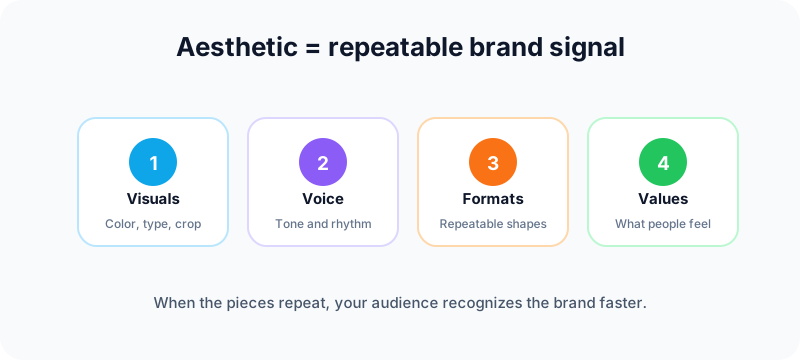
A strong social media aesthetic is not just a pretty feed. It is the repeatable visual and verbal system that helps people recognize your brand before they read the username.
That matters because creators now publish across Instagram, TikTok, YouTube Shorts, LinkedIn, X, Threads, Pinterest, and more. If every platform looks like a different person made it, your audience has to relearn you every time. Aesthetic consistency makes that work easier for them.
What a social media aesthetic actually is
Your aesthetic is the operating system behind your public brand. It includes colors, photo style, typography, editing, layout, caption voice, recurring topics, and the emotional promise people feel when they land on your profile.
Most creators make the mistake of treating aesthetic as decoration. They pick a palette, save a few inspiration posts, and call it done. But a useful aesthetic answers three bigger questions:
- Recognition: would someone know this post came from you without seeing the handle?
- Trust: does the feed make your brand feel intentional and credible?
- Production: can you repeat the style without redesigning from scratch every day?
If the answer is no, the issue is usually not taste. It is a missing system.
Why inconsistent feeds feel harder to trust
People do not need design language to sense inconsistency. A profile with beige product photos, neon memes, heavy filter selfies, random fonts, and unrelated captions feels scattered even when individual posts are good.
That friction creates small doubts: What is this account about? Is this a serious brand or an experiment? Should I follow for more of this, or was this one post a one-off?
The common inconsistency patterns
- Template drift: every carousel uses a different layout, font size, or visual hierarchy.
- Color drift: the account has no dominant palette, so the grid never settles.
- Voice drift: visuals feel premium, but captions sound rushed, jokey, or generic.
- Format drift: the creator jumps between quotes, tutorials, selfies, memes, and product posts without a clear mix.
- Trend drift: borrowed aesthetics from other creators pile up until the brand disappears.
The fix is not to make every post identical. It is to create enough repetition that variety still feels like it belongs to one world.
The four layers of a strong social media aesthetic
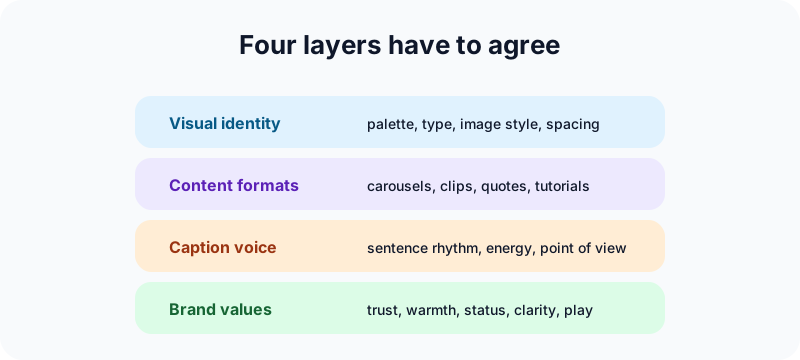
When a brand feels clear, four layers usually line up: visual identity, content format, caption voice, and brand values. If one layer conflicts with the others, the feed starts to wobble.
1. Visual identity
This is the part people notice first. It covers palette, lighting, filters, type choices, composition, spacing, and image texture. A consultant may use clean neutrals and wide spacing. A streetwear creator may use flash, grain, tight crops, and stronger contrast.
2. Content formats
Formats are the containers you repeat: educational carousels, behind-the-scenes clips, quote cards, product breakdowns, founder notes, screenshots, tutorials, or before-and-after posts. Aesthetic gets easier when each recurring content type has a known structure.
3. Caption voice
Visuals have to match the way the account speaks. A calm minimalist grid paired with hype-heavy captions can feel fake. A raw behind-the-scenes style paired with corporate copy can feel managed instead of human.
4. Brand values
Values are the deeper signal. Are you selling calm expertise, bold energy, luxury, accessibility, experimentation, discipline, humor, or intimacy? Your aesthetic should make those values visible without forcing you to explain them in every post.
Popular social media aesthetics in 2026
You do not need to invent a new style from zero. Most brands start by choosing a recognizable direction, then adapting it until it feels specific to their audience and offer.
Minimalist
Minimalist feeds use restrained color, clean type, simple layouts, and room to breathe. They work well for consultants, wellness brands, SaaS founders, premium products, and creators who want to signal clarity.
Warm editorial
This style feels like a lifestyle magazine: soft light, tasteful crops, muted contrast, tactile objects, and thoughtful captions. It suits creators who teach, curate, review, or sell products where trust and taste matter.
Vibrant pop
Vibrant pop uses bold colors, expressive text, stickers, high-energy edits, and playful layouts. It works for entertainment, events, youth-focused brands, creators with a loud personality, and products that benefit from momentum.
Authentic raw
Raw does not mean careless. It means the post looks close to real life: quick phone clips, unpolished behind-the-scenes moments, informal captions, photo dumps, and visible process. This aesthetic can outperform polished content when audiences are tired of ads.
Dark academia or moody expert
Dark neutrals, serif type, shadows, notebooks, books, coffee, and reflective writing create an intellectual mood. It can fit writers, educators, niche researchers, book creators, and high-trust personal brands.
Hybrid styles usually win
The strongest profiles often blend two directions. For example, a creator might combine minimalist layouts with raw photography, or use editorial visuals with very direct educational captions. The goal is not purity. The goal is memorability.
How to build your aesthetic from scratch
Do this like a brand designer, not like someone randomly saving pretty posts. The process should turn taste into rules you can reuse.
Step 1: choose three brand words
Pick three words that describe how your brand should feel. Not what you sell. What people should sense.
- Calm, useful, premium
- Bold, playful, practical
- Warm, expert, honest
- Fast, experimental, direct
These words become the filter for every creative choice. If a template, font, photo, or caption does not support them, it probably does not belong.
Step 2: build a private reference board
Create a mood board in Pinterest, Canva, Milanote, Notion, Figma, or a simple folder. Pull from outside your niche too: magazine layouts, interiors, packaging, album covers, websites, outfits, product photography, and creators whose voice feels close to what you want.
Do not copy. Study repeated patterns:
- Which colors show up again and again?
- Are the photos bright, dark, grainy, clean, close, or wide?
- Are layouts symmetrical, editorial, crowded, sparse, or collage-like?
- Does the writing feel short and punchy or slower and reflective?
Step 3: narrow the palette
A practical palette is small: one main color, one support color, one neutral, and one accent if needed. Too many colors make posts harder to recognize. If you already have brand colors, choose how they appear in social content instead of redesigning everything.
Step 4: define type and layout rules
Pick one primary font family and one backup. Then define simple layout behavior: where headlines sit, how much margin you leave, how quote cards work, and whether photos need borders, labels, or overlays.
Step 5: write image rules
Image rules prevent random-looking posts. Examples:
- Use natural light when possible.
- Keep product backgrounds uncluttered.
- Crop faces and objects closer than instinct suggests.
- Use one editing direction, not a new filter every week.
- Alternate between photo-led posts and text-led posts.
Step 6: test a nine-post grid
Before you publish a new look, mock up nine posts together. A single post can look strong in isolation and still break the feed. Nine posts reveal whether the color balance, text density, and format mix feel coherent.
If Instagram is a core channel, use the Instagram grid maker to preview how a visual campaign might sit on a profile. For swipe posts, the Instagram carousel splitter helps turn wide visuals into cleaner carousel panels.
Aesthetic rules by platform
The same brand should not look identical everywhere. Each platform changes how people experience your style.
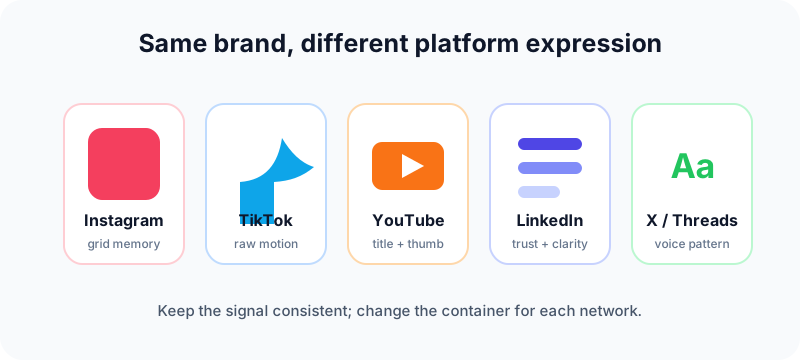
Instagram rewards visual memory. Your grid, carousel covers, Reels covers, Stories, and Highlights should feel related. Profile-level cohesion matters more here than on most networks.
If you are renaming or repositioning a brand, check the handle first with the Instagram handle checker so the visual identity and username can launch together.
TikTok
TikTok is more tolerant of raw visuals, but the first frame still matters. Use consistent on-screen text, recurring locations, recognizable pacing, and a caption tone that matches your personality. The TikTok caption generator can help you draft variants without turning every caption into the same formula.
YouTube Shorts and long-form
YouTube aesthetics show up in thumbnails, titles, intro pacing, and recurring series formats. Before publishing, test clarity with the YouTube title checker and build metadata context with the YouTube tag generator.
LinkedIn is less about feed beauty and more about trust. Your aesthetic can live in document covers, simple diagrams, profile visuals, line breaks, and a consistent point of view. If posts look clean but say nothing specific, the style will not save them. Use the LinkedIn text formatter to make longer posts easier to scan.
X and Threads
Text-first platforms still have aesthetics. Your sentence length, recurring phrasing, screenshot style, meme restraint, and thread structure all become part of the brand. Visual consistency here is often about clarity and voice more than color.
How to keep the aesthetic consistent when posting a lot
Consistency usually fails because the workflow is loose. When you create each post from a blank page, mood decides the brand. A better system reduces how many decisions you make from scratch.
Create reusable templates
Build a small template library for recurring post types:
- Educational carousel
- Quote or opinion card
- Before-and-after visual
- Product feature post
- Behind-the-scenes update
- Announcement graphic
Canva's brand style guide resources and Adobe's brand guideline examples are useful references if you want to document colors, fonts, and imagery more formally.
Batch by creative mode
Do not shoot photos, design covers, write captions, and schedule posts all at once. Batch by mode:
- Capture or collect visuals.
- Edit visuals in one session.
- Write captions in one session.
- Schedule and review the grid last.
This keeps the visual choices more stable because your brain is not switching jobs every five minutes.
Use a pre-publish checklist
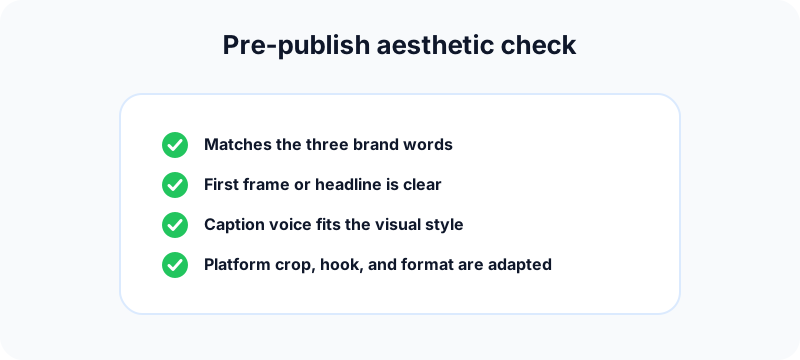
Before scheduling, ask:
- Does this post match the three brand words?
- Does the first frame or headline make the topic obvious?
- Does the caption voice match the visual style?
- Does this platform need a different crop, hook, or caption length?
- Does the week have variety without looking random?
Fuxux helps with the operating side: plan posts, adapt captions per platform, and keep upcoming content visible in one workflow. Use the free social media growth guide when you need topic and cadence ideas before filling the calendar.
Free tools for keeping your aesthetic consistent
A brand system becomes useful when it shows up in the actual publishing workflow. These free tools help turn the aesthetic into repeatable assets instead of a one-time mood board.
- Instagram grid maker: preview a nine-post visual rhythm before launching a new look.
- Instagram carousel splitter: split wide brand graphics, checklists, or tutorials into clean swipe posts.
- Instagram handle checker: check whether a cleaner handle is available before rebranding the profile.
- TikTok caption generator: create short caption variants that keep the same voice without repeating the same text.
- YouTube title checker: keep video titles clear when your aesthetic extends into thumbnails and Shorts.
- LinkedIn text formatter: make text-heavy posts match a cleaner editorial style.
How to measure whether your aesthetic is working
Aesthetic work should make the brand easier to recognize and easier to act on. That means you should measure more than likes.
Watch recognition signals
Look for comments and DMs where people use the same language back to you: clean, cozy, sharp, useful, funny, calm, premium, chaotic, honest. Repeated language means the signal is landing.
Watch save and share behavior
Saves and shares are often better signals than likes for educational or reference-style content. If your new carousel style earns more saves, the format may be making the ideas easier to keep.
Watch profile actions
Check profile visits, follows, link clicks, newsletter signups, demo clicks, or DMs. If the feed looks better but profile actions do not improve over time, the aesthetic may be attractive but unclear.
Review groups of posts, not one winner
Do a monthly audit by content type. Compare five carousels against five older carousels, not one viral post against one flop. You are looking for patterns that repeat.
Common mistakes to avoid
Copying an aesthetic without copying the strategy
A creator's colors may look good because their audience, offer, and voice support them. Borrowing the look without the strategy often creates a pretty but hollow feed.
Changing the brand every time reach drops
Low reach can come from weak hooks, poor timing, unclear topics, or normal testing noise. Do not redesign the whole identity because one week was quiet.
Letting AI or stock assets break the system
AI visuals and stock libraries can fill gaps, but only if they follow your existing palette, composition, and tone. Randomly generated assets can make the feed look less intentional.
Making everything too perfect
Over-polished content can feel like an ad. Keep some human texture: process clips, real screenshots, founder notes, rough drafts, and honest behind-the-scenes posts.
Frequently asked questions
What is a social media aesthetic?
A social media aesthetic is the consistent visual and verbal style of a brand across platforms. It includes color, type, image style, caption tone, formats, and recurring themes.
Do I need the same aesthetic on every platform?
No. Keep the same brand signal, but adapt the expression. Instagram may need stronger visual cohesion, TikTok may need more raw motion, and LinkedIn may need cleaner text structure.
How many colors should my social media aesthetic use?
Start with three or four: one main color, one support color, one neutral, and one accent. Add more only when the feed still feels recognizable.
How often should I change my aesthetic?
Small refinements can happen monthly, but major changes should be rare. Give a visual system enough time to generate data before deciding it failed.
Can a raw aesthetic still be strategic?
Yes. Raw content can be highly intentional. The difference is that the rules are less visible: recurring locations, caption rhythm, edit pacing, subject matter, and timing.
The practical next step
Do not start by redesigning everything. Start by choosing three brand words, auditing your last nine posts, and writing five rules you can repeat for the next month.
Then build the workflow around those rules. Preview the feed, adapt captions per platform, and schedule enough content to see patterns. If you want one place to plan that workflow, try Fuxux free and turn your aesthetic into a repeatable publishing system instead of a mood you have to rediscover every week.
About the author
I build Fuxux, a scheduler that publishes to 12 platforms from one queue. I write about the parts of posting that are actually fiddly — what each platform will and won't let you schedule natively, where the API limits bite, and how to keep a queue running without babysitting it.
Ready to post smarter?
Fuxux handles the scheduling, the formatting, and the AI captions — so you can focus on ideas.
Start free — no credit card