TikTok vs YouTube Shorts for Beginners: 2026 Guide
Compare TikTok and YouTube Shorts for beginner creators in 2026: discovery, monetization, video length, audience fit, cross-posting.

If you are new to short-form video, the real question is not simply TikTok or YouTube Shorts? It is which growth system you want to learn first.
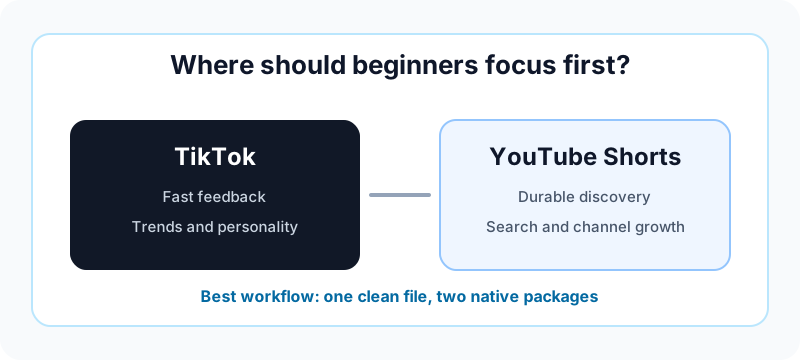
TikTok is a fast feedback engine. It can test a new creator quickly, reward trend timing, and show you within days whether a hook has energy. YouTube Shorts is a library engine. It gives you the Shorts feed, but it also connects your clips to search, subscriptions, long-form videos, playlists, and a more durable channel asset.
Disclosure: Independent guide from Fuxux. We are not affiliated with the platforms or third-party tools mentioned in this article. Product names belong to their owners.
The practical beginner answer for 2026: pick one platform as your learning focus, but build a workflow that lets you publish clean versions to both when the content fits. You will learn faster, protect yourself from platform risk, and avoid guessing where your audience actually responds.
The short answer for beginners
Start with TikTok if you want quick audience testing, trend participation, personality-led clips, and rapid feedback on hooks. Start with YouTube Shorts if your content is searchable, educational, evergreen, or meant to lead into long-form videos.
That does not mean you should ignore the other platform. The best beginner workflow is usually:
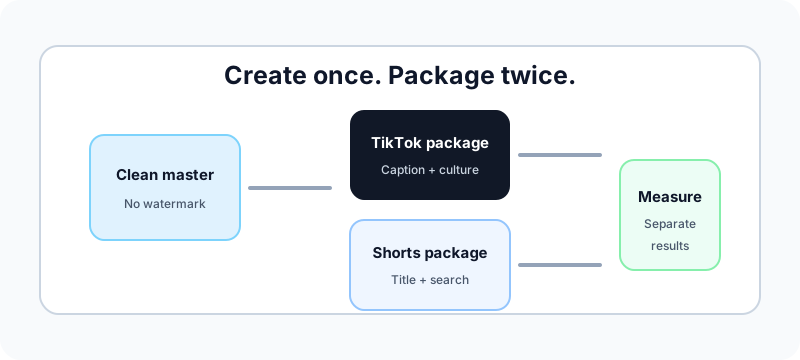
- Create one clean vertical master file with no watermark.
- Package it for TikTok with a native-feeling caption, hook, and sound strategy.
- Package it for YouTube Shorts with a clearer title, search intent, and channel context.
- Review results after 20 to 30 posts, not after one random upload.
Five questions that tell you where to focus first
1. Do you need fast feedback or durable discovery?
If you want to test many hooks and see early reactions quickly, TikTok has the edge. If you want helpful clips to resurface through search and recommendations over time, YouTube Shorts is usually the better first focus.
2. Is your content trend-led or search-led?
Trend commentary, creator personality, humor, and culture reaction often fit TikTok. Tutorials, product explainers, how-to clips, and niche education often fit YouTube Shorts because viewers also discover them through search and related content.
3. Are you building toward long-form video?
If yes, YouTube Shorts has a structural advantage. A Short can introduce a topic, then send interested viewers deeper into your channel. TikTok can still drive awareness, but YouTube keeps short and long-form content inside one account system.
4. Do you want clearer monetization milestones?
YouTube publishes Partner Program thresholds and explains Shorts revenue sharing in its help center. TikTok has creator monetization programs too, but eligibility and availability vary heavily by country and account type.
5. Are you relying on one country or one platform?
Regulation, regional feature availability, and account restrictions can change. A beginner should not build the whole business on one feed. Use one platform for focus, but keep your content files, audience capture, and publishing process portable.
Discovery: how each platform gives beginners a chance
TikTok discovery feels faster
TikTok is famous for giving new accounts a chance through the For You feed. The platform describes recommendation inputs such as user interactions, video information, and device/account settings in its recommendation documentation. For a beginner, that means a strong first second, clear topic signals, and completion rate matter immediately.
The upside is speed. A new creator can learn quickly because the platform may test a clip beyond their follower base. The downside is volatility. A video can spike, then disappear. Trend waves move fast, and repeating success can be harder than getting one lucky breakout.
YouTube Shorts discovery connects to a bigger ecosystem
YouTube Shorts has its own swipe feed, but it also belongs to YouTube. Your channel page, long videos, search results, subscriptions, playlists, and related recommendations all sit around the same account. That makes Shorts useful even when a clip does not explode overnight.
For educational creators, this matters. A 45-second tip can introduce a topic, then point people toward a longer video, newsletter, product page, or playlist. Shorts can be a discovery layer, not the whole business.
Video length rules in 2026
YouTube Shorts length
YouTube classifies eligible vertical or square videos up to 3 minutes as Shorts when they meet the current Shorts requirements. YouTube's help documentation explains the current rules and notes that classification has changed over time. See YouTube Help on Shorts creation for the latest details.
TikTok length
TikTok supports much longer uploads than many beginners realize, but longer is not automatically better. TikTok's own support pages describe recording and upload options that go beyond classic short clips. See TikTok Support on creating videos for current limits in your region.
Beginner length recommendation
Start shorter than the maximum. For most new creators, 20 to 60 seconds is enough to learn hooks, pacing, captions, retention, and payoff. Move into 60 to 180 second clips only when your topic truly needs the time and your retention data supports it.
Monetization: which platform pays beginners better?
YouTube monetization is more transparent
YouTube's Partner Program has documented thresholds for fan funding features and broader ad revenue sharing. Shorts revenue sharing uses a pooled model. YouTube states that eligible creators receive 45% of the revenue allocated to creators from Shorts ads after music licensing allocation. See YouTube Partner Program overview and YouTube Shorts monetization policies.
The key beginner takeaway is that YouTube is not only about Shorts payouts. Shorts can help you earn subscribers who later watch long-form videos, join memberships, buy products, or follow a deeper content library. If you plan to grow that library without appearing on camera, use the faceless YouTube video workflow so Shorts and long-form stay original.
TikTok monetization can work, but it is less universal
TikTok has creator monetization programs, LIVE, brand collaborations, affiliate commerce, and shop-related opportunities in some markets. The challenge is that access changes by region, account status, content type, and program rules. For many beginners, TikTok's first value is audience discovery and brand deal potential, not immediate platform payouts.
Do not build your plan around platform payouts
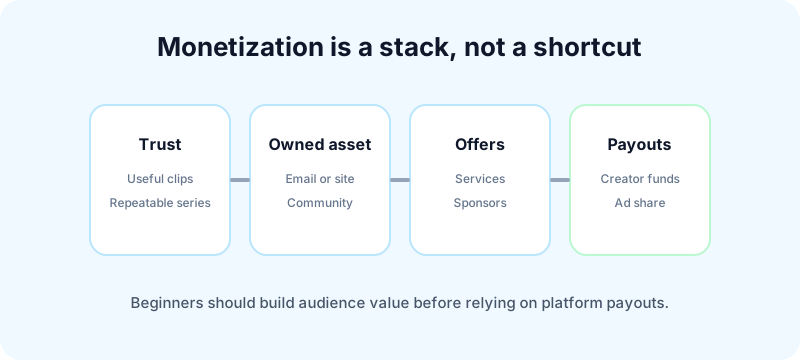
Most beginners should think about monetization in this order:
- Audience trust through useful or entertaining content.
- Owned assets such as an email list, site, product, or community.
- Indirect revenue from services, affiliates, sponsorships, or products.
- Platform payouts as a bonus once your volume and eligibility improve.
Audience fit: who are you trying to reach?
YouTube reaches broadly
YouTube is one of the broadest social/video platforms by age range and geography. Pew Research Center's social media research has repeatedly shown YouTube's unusually wide adoption across age groups in the United States. See Pew Research social media fact sheet for updated demographic context.
TikTok is culturally powerful with younger audiences
TikTok remains especially strong for trend formation, younger audiences, entertainment discovery, and personality-led content. If your niche depends on fast-moving culture, music, memes, fashion, beauty, food, fitness, or creator commentary, TikTok can teach you a lot quickly.
The best choice depends on your niche
A B2B software tutorial may perform better as a searchable YouTube Short. A street interview, trend reaction, or relatable skit may get better early testing on TikTok. A cooking tip, travel clip, or product demo may work on both with different packaging.
Creative tools and editing workflow
TikTok is stronger for native creative play
TikTok's in-app editing culture is part of the product: sounds, effects, stitches, duets, captions, filters, and native trends. If you enjoy making content directly inside the app, TikTok can feel easier and more playful.
YouTube Shorts is simpler, but improving
Shorts creation tools have improved, but many YouTube creators still edit externally, then upload clean vertical files. That can be an advantage for beginners who want one consistent editing workflow across platforms.
Use one master file
Edit once in CapCut, Premiere, Final Cut, Descript, or your tool of choice. Export a clean vertical file without platform watermarks. Then package the same core idea differently for TikTok and YouTube Shorts.
Cross-posting without hurting performance
What not to do
- Do not download a TikTok with a watermark and repost it everywhere.
- Do not use the same caption and hashtags on every platform.
- Do not judge both platforms by one upload.
- Do not assume a flop on one platform means the idea is bad.
What to do instead
- Upload the clean source file.
- Write a TikTok caption that feels conversational and comment-friendly.
- Write a YouTube title that states the topic clearly.
- Track retention, comments, saves, shares, and subscribers separately.
Before publishing, use the TikTok caption generator for short-form hooks, the YouTube title checker for Shorts titles, and the YouTube tag generator for supporting tag ideas.
Fuxux helps with this workflow by letting you plan multi-platform posts, adapt captions with AI assistance, and keep your publishing cadence visible in one place. Use scheduling to reduce manual work, but still show up after publish to reply to early comments.
A 30-day beginner plan
Week 0: set the system
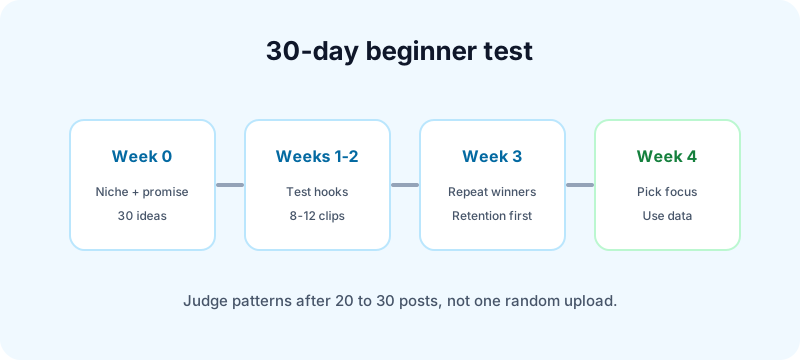
Choose one niche, one promise, and two repeatable formats. Write your channel promise in one sentence: "I help [person] achieve [result] without [pain]." Then list 30 video ideas before you publish anything.
Weeks 1 and 2: test hooks
Publish 8 to 12 clips. Keep the topic narrow so you can compare formats. Test different first lines, first frames, and payoffs. Do not change everything at once.
Week 3: repeat what held attention
Look for retention and comments, not only views. If one structure keeps people watching, make five more variations. Beginners often quit right before a repeatable pattern appears.
Week 4: decide your focus platform
After 20 to 30 posts, choose a primary platform based on evidence:
| Signal | Lean TikTok | Lean YouTube Shorts |
|---|---|---|
| Fast early reach | Strong | Mixed |
| Searchable tutorials | Useful, but less durable | Strong |
| Trend reaction | Strong | Mixed |
| Long-form funnel | External path needed | Built in |
| Subscriber/community depth | Can work | Usually stronger |
Common beginner mistakes
Posting five clips, then quitting
Five posts is not enough data. Short-form video is noisy. Commit to at least 20 to 30 attempts before judging your niche or platform.
Copying trends without a niche promise
Trends can bring attention, but they do not automatically build an audience. Tie trends back to a repeatable topic your viewer can understand.
Ignoring the first frame
Short-form video is decided fast. The first frame should show the topic, the tension, or the payoff. If the viewer has to wait for context, they may never get there.
Using platform payouts as the main goal
Views are useful, but a beginner business should also build owned assets, offers, and audience trust. Do not wait for a platform program to tell you your content has value.
Frequently asked questions
Should beginners start with TikTok or YouTube Shorts?
Start with TikTok if you want fast testing and trend feedback. Start with YouTube Shorts if you make searchable, educational, or long-form-connected content. If possible, publish clean versions to both and decide after 30 days of data.
Can I post the exact same video to both?
You can use the same source video, but do not use the same packaging. TikTok captions can be conversational. YouTube titles should be clearer and more searchable.
Which platform is better for faceless content?
YouTube Shorts is often friendlier to faceless educational formats because search and topic clarity matter. TikTok can still work for faceless content if the visual hook is strong and the pacing is native to the feed. For the full production system — script, voiceover, visuals, and monetization safety — read how to make faceless YouTube videos.
Which platform is better for making money?
YouTube usually has the clearer long-term monetization ecosystem. TikTok can create fast reach and brand opportunities. For beginners, the best money plan is to use short-form content to build trust and send people toward owned offers or deeper content.
How many Shorts or TikToks should I post per week?
Post at a pace you can sustain. Three to five strong clips per week beats a daily sprint that burns out after ten days. If you have the time and ideas, five to seven per week gives you faster learning.
Final recommendation
If you are still unsure, use this rule: TikTok for faster feedback, YouTube Shorts for longer-term channel building. The best beginner strategy is not blind cross-posting. It is focused learning with portable content.
Create one clean vertical file, package it for each platform, track what actually happens, and repeat the formats that earn attention. When the manual workflow starts slowing you down, try Fuxux free to plan posts, adapt captions, and keep your short-form publishing schedule consistent across the channels you use.
About the author
I build Fuxux, a scheduler that publishes to 12 platforms from one queue. I write about the parts of posting that are actually fiddly — what each platform will and won't let you schedule natively, where the API limits bite, and how to keep a queue running without babysitting it.
Ready to post smarter?
Fuxux handles the scheduling, the formatting, and the AI captions — so you can focus on ideas.
Start free — no credit card